Excavator hire in the country, from Chișinău to any village
Country plots bring their own jobs: hillside water, an old orchard, a pond to dig, a muddy track.
Call nowTell us the village and what the plot needs. The excavator arrives with our operator in the cab.
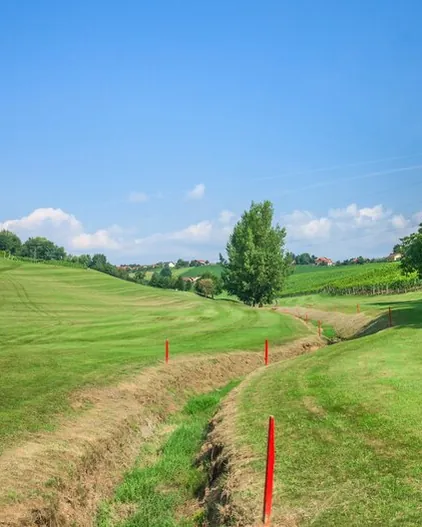
Excavator hire for work in the country
Five earthworks people usually call an excavator out of town for. Each one says when in the year it is easiest to do.
-
A ditch for water off the hill
On a sloping plot, rain and snowmelt run down towards the house or into the cellar. A ditch across the slope catches the water and carries it past the plot, into the gully or the roadside ditch. Show the operator where the water runs and he digs the ditch to follow it.
Best time
In spring you can see where the water runs. The digging usually waits until the ground dries.
-
A pond on the plot
A country pond is usually for watering the garden, keeping a few fish or simply the view. Clay holds water well, and if sand turns up while digging, the bottom is lined with sheeting afterwards. The dug soil builds the bank of the pond. Whatever is left over goes into our tipper.
Best time
Late summer or autumn, when the water in the ground sits lowest.
-
An old orchard
Dry or worn-out fruit trees are better pulled out than cut down, so no stumps stay in the ground. The bucket lifts each tree roots and all. The trunks stay with you for firewood and the roots go on a pile at the edge. The holes are filled and the ground smoothed for new trees or ploughing.
Best time
In autumn after picking, or at the end of winter before the buds swell.
-
An old vineyard
An abandoned vineyard has concrete posts and wire as well as the vines. You take the wire down first. Then the excavator pulls out posts and vines with their roots, row by row. Whole posts are stacked to one side, still good for a fence or a new vineyard.
Best time
Late autumn, after the last harvest, so you can plough or plant in spring.
-
A track to the plot
A field track turns to mud after the first rain. The excavator strips the topsoil along its whole length, our tipper brings quarry stone and crushed stone, and the roller compacts them. Where the track crosses the roadside ditch, a pipe is buried under it so the water keeps flowing.
Best time
Summer or autumn, on dry ground, so the tipper and roller do not churn the track.
How the excavator finds a plot in a village
On the main road the low loader is just another lorry. The hard part comes at the end, in the village lanes and on the field track, so we ask about those first.
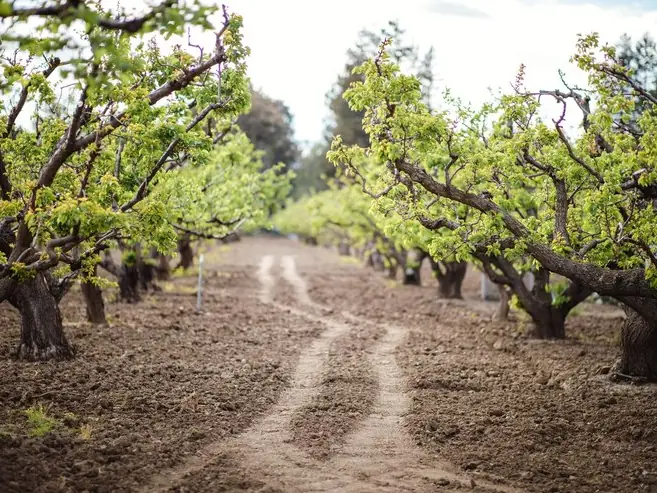
A landmark, not just an address
Many dachas and plots on the edge of a village have no number on the gate. Give us a landmark: the turning to the next village, the church, the bus stop, the last house in the lane. Better still, have someone meet the low loader where the village begins.
The field track
On dry ground the low loader usually gets close to the plot. After rain the last stretch can be too soft for it. Then the excavator comes off earlier and, if the way is short, drives the rest by itself.
The boundary
Village plots often have no fence between them. Show the operator where your land ends and the neighbour’s begins, above all when a ditch or a track runs along the edge.
Wires overhead
A power line sometimes crosses the field, or even the plot itself. Mention it in advance so the operator keeps the arm well away from the wires.
We work in the city and across the whole country
We work on plots in Chișinău and all over the country, from the dachas next to the city to villages in the north and south.
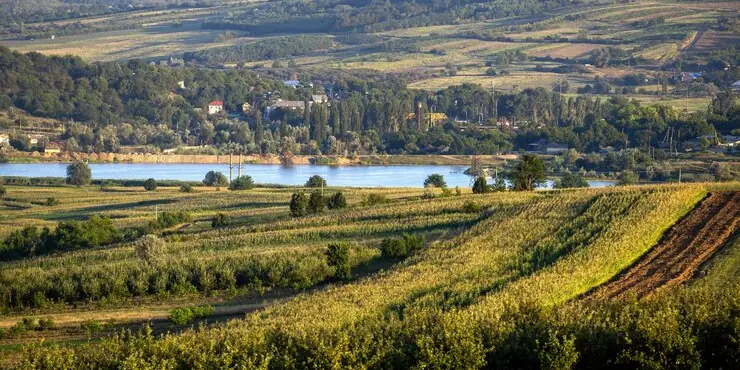
Chișinău
Botanica, Buiucani, Centru, Ciocana, Râșcani.
Across the country
Far is fine: Lipcani on the Prut, Otaci on the Nistru, Basarabeasca and Taraclia down south, and every village between them.
Questions about excavator hire in the country
What decides the price of excavator hire out of town?
Three things: the job, how many hours or days the excavator stays on the plot and how far the village is. You hear it all on the first call, before we fix the day.
Does someone come with the excavator, or do I drive it?
It comes with someone. Our operator sits at the controls from the first bucket to the last. Your part is what nobody else knows: where the boundary runs and what you want to end up with.
Can the excavator get along a dirt road after rain?
Usually, but the last stretch decides the day. Tell us what the track is like after rain. If the mud is deep, we pick a drier day together.
What happens to the trees and vines that come out?
They stay on the plot where you say: trunks for firewood, roots and vines piled at the edge, concrete posts stacked. If you want the ground left completely clear, say so at the start so the tipper comes too.
Will a pond dug on our land hold water?
It depends on what the digging turns up. Clay usually holds water with nothing on the bottom. If we hit sand, the operator shows you the layer and the bottom is lined with sheeting afterwards. The water comes from rain, a spring or a well, so think about it before the dig.
Do you work in villages in the north and south?
Yes, all over Moldova, from Lipcani to Taraclia. The further the village, the sooner we should know, so the day covers both the drive and the work.
Can you bring stone for the track to the plot?
Yes. Quarry stone, crushed stone and gravel are our own stock. Once the excavator has the topsoil off, the tipper tips its load along the track and the roller goes over it last, so the track stays firm through the autumn rain.
What if I cannot get to the plot on the day?
Send someone from the village who knows the plot. The boundary and the place for the job have to be shown to the operator when he arrives, and a neighbour or relative who knows where the ditch or pond goes can do that just as well.
A plot out of town that needs sorting? Tell us the village.
Tell us what needs doing on the plot and which road leads there. One call is enough to know the day and the price.
Call now